
Small holes, dents, and cracks in plasterboard walls are inevitable in any home, whether caused by a doorknob, a moved piece of furniture, or the simple settling of the house over time. Engaging a plasterer for minor repairs is rarely necessary; with a few basic tools and the right materials, you can restore the wall to a flawless finish over a weekend. The approach depends on the size and type of damage, so start with a thorough inspection. A simple dent or popped nail might only need a skim of filler, while a hole larger than a few centimetres will require a patch. Run your hand over the surrounding wall to feel for any raised edges, and use a utility knife to trim away loose paper and crumbled gypsum until you have a clean, slightly recessed surface. Vacuum the area and wipe with a lightly damp cloth to remove dust, which would otherwise prevent the filler from adhering.
Advertisement
For small dings, nail pops, and hairline cracks, a pre-mixed, lightweight joint compound is your best friend. Scoop a small amount onto a 150-millimetre plasterer’s knife and press it firmly into the recess, smoothing it in one direction to leave the compound slightly proud of the surface. The filling will shrink as it dries, so a second or even third skim is often necessary to achieve a perfectly flat plane. Allow each layer to dry completely – typically a few hours in a heated interior, more in damp weather – before sanding with a 120-grit sanding sponge. Use a handheld work light held at a shallow angle to the wall; shadows instantly reveal imperfections invisible in perpendicular light. Patience at this stage saves the frustration of seeing a crater show through fresh paint.
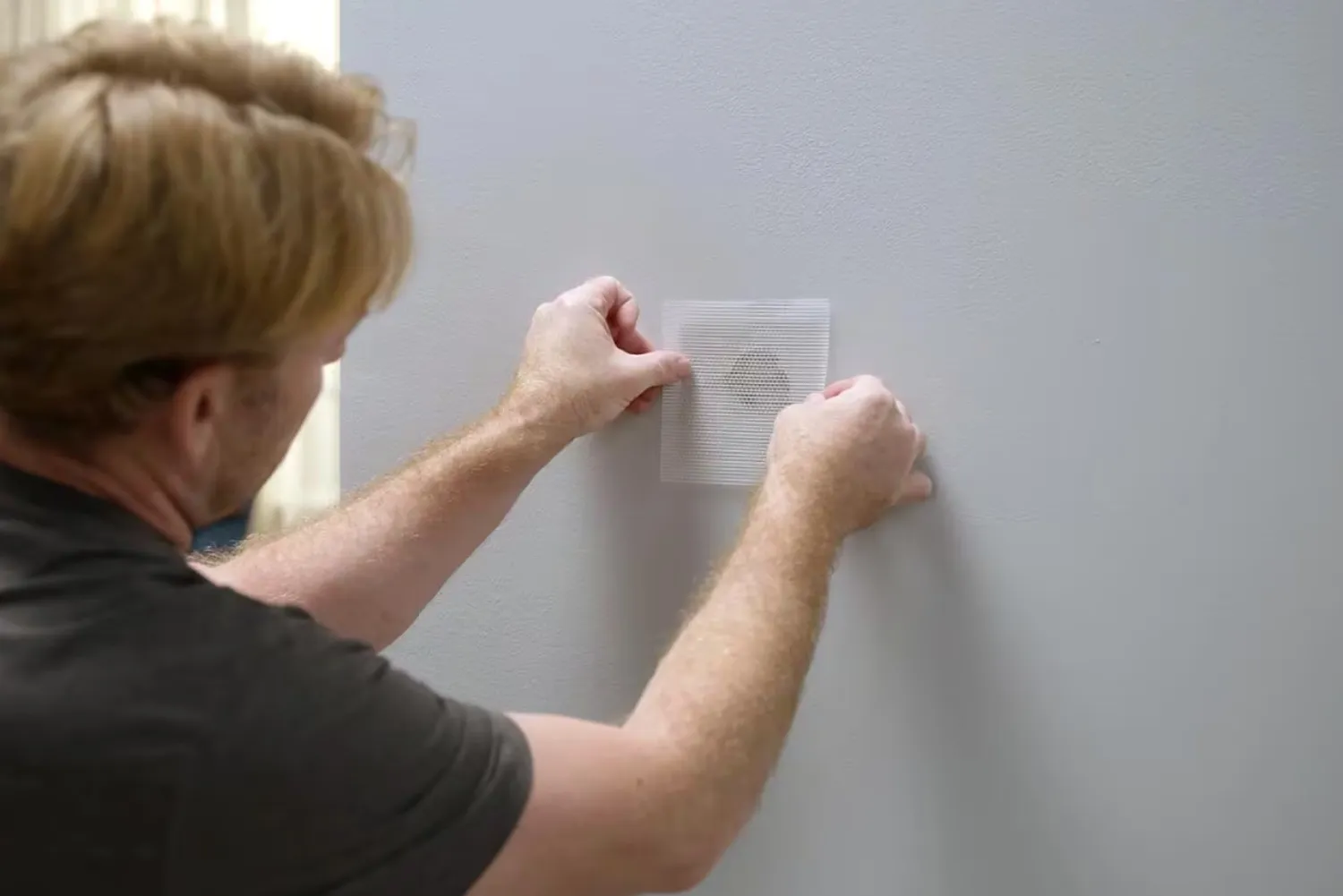
Medium-sized holes, up to about 50 millimetres in diameter, call for a mesh patch or a self-adhesive fibreglass tape. After cleaning the hole, peel and stick the patch over it, then apply joint compound in thin, feathering coats that extend at least 100 millimetres beyond the patch on all sides. Feathering means gradually thinning the compound as you move away from the centre, blending the repair seamlessly into the surrounding wall. Use a wide 250-millimetre trowel or knife for the final coat, holding it at a shallow angle to avoid digging into the compound. Between coats, resist the temptation to overwork the surface; minor ridges will sand flat, but persistent trowel marks become permanent. Let the final coat dry overnight, then sand with a fine 180-grit paper wrapped around a sanding block to maintain a flat plane.