
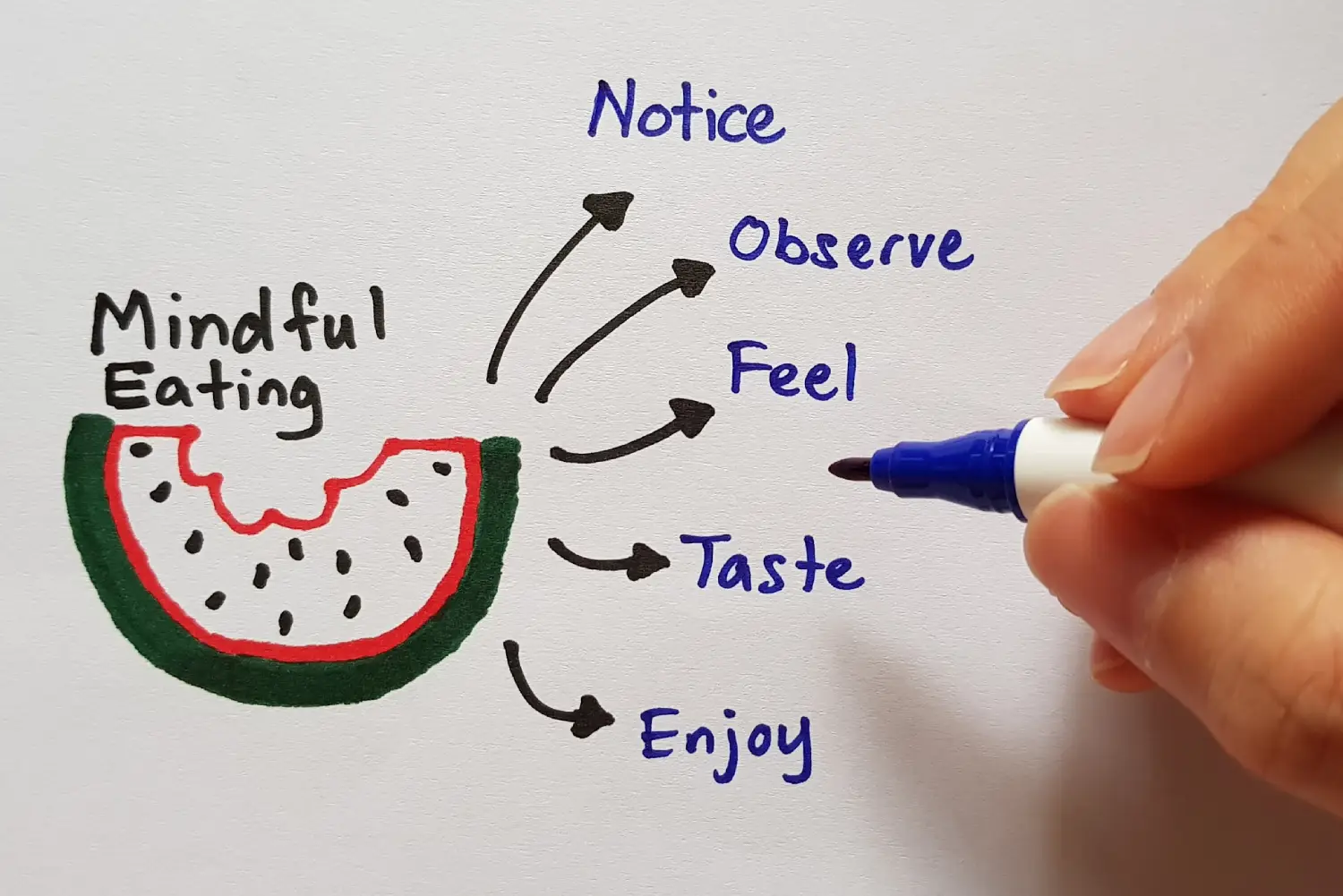
Managing portion sizes without strict calorie counting becomes much easier when mindful eating is paired with an understanding of energy density. Start meals with a glass of water and include fibre-rich vegetables and legumes, which add volume and nutrients while delivering steady energy. Serve meals in the kitchen rather than bringing large dishes to the table, as family-style serving encourages mindless second helpings. At a restaurant, consider asking for a takeaway container at the beginning of the meal and packing away a third of the dish before you start; Australian serving sizes are often generous, and this strategy provides a ready-made lunch for the next day while protecting you from overeating. The point is not deprivation but rather aligning consumption with what your body actually needs.
Advertisement
Emotions are deeply entwined with eating, and mindfulness encourages a compassionate awareness of these patterns without judgement. If you notice you are reaching for chocolate after a tense phone call, simply label the urge – “stress eating” – and take a five-minute pause to make a tea, stretch, or step outside. Often the craving passes or diminishes enough that you can choose a modest serving and savour it slowly rather than consuming the entire block. Keeping a brief journal noting what you ate, how hungry you were beforehand, and how you felt afterwards can reveal patterns, such as afternoon fatigue leading to a sugar grab. Self-criticism tends to backfire, so approach this log with curiosity, as if you were documenting weather patterns, not moral failings.
Over time, mindful eating rebuilds the trust between your body and your food choices. It steers you away from rigid food rules that label items as “good” or “bad” and toward a balanced, flexible approach where all foods can fit. You might find that a square of good dark chocolate savoured slowly after dinner brings more pleasure than a supersized bar consumed in front of Netflix. Energy becomes steadier throughout the day, with fewer post-lunch slumps and less reliance on caffeine. This isn’t about a quick fix; it’s a gradual retraining of attention that can shift not only how you eat but how you relate to the everyday signals of your body, ultimately supporting a more energised and vibrant life.